
Tuscaloosa County District Court Overview
Tuscaloosa County is Alabama's Sixth Judicial Circuit. District Court operates at the county courthouse and has limited jurisdiction. It handles traffic, district criminal and civil cases, preliminary matters, and other lower-level proceedings. Circuit Court remains the general-jurisdiction trial court for felony, higher civil, domestic-relations, and lower-court appeal work.
The Circuit Clerk is the record keeper for both District and Circuit Court. Magaria H. Bobo's office maintains criminal, civil, traffic, juvenile, domestic, child-support, and warrant divisions. District Court records therefore use the same clerk access network, but the court label and division must be checked before a filing, payment, or copy request.
Tuscaloosa County District Judges
The official judiciary directory lists two District Court judges, both on the sixth floor of the Tuscaloosa County Courthouse. The table identifies the local state District Court bench and its direct judge-specific contacts. Case filing and record requests still go through the Circuit Clerk rather than a judge's office.
| Court # | Type | Address | Phone |
|---|---|---|---|
| Hon. Joanne M. Jannik | District Court | 714 Greensboro Avenue, 6th Floor, Tuscaloosa, AL 35401 | (205) 464-8381 |
| Hon. James E. Gentry | District Court | 714 Greensboro Avenue, 6th Floor, Tuscaloosa, AL 35401 | (205) 464-8422 |
District vs Circuit vs Municipal
Alabama does not use a generic county court or justice-of-the-peace court as the local comparison here. Tuscaloosa County's useful split is District Court, Circuit Court, and Municipal Court. Probate Court is another separate limited venue for estates, wills, guardianships, adoptions, mental health, marriage certificates, and recording functions.
| Point | District Court | Circuit Court | Municipal Court |
|---|---|---|---|
| Role | Limited-jurisdiction state trial court | General-jurisdiction state trial court | City court with limited local jurisdiction |
| Common work | Traffic, lower-level criminal and civil, preliminary matters | Felony, higher civil, domestic, and lower-court appeals | City traffic, ordinance, parking, and certain misdemeanors |
| Record keeper | Circuit Clerk | Circuit Clerk | Each municipal court |
| Local venues | Tuscaloosa County Courthouse | Tuscaloosa County Courthouse | Tuscaloosa and Northport municipal courts |
Tuscaloosa District Court Case Path
A lower-level criminal or traffic case may begin and end in District Court. A felony can have preliminary District Court activity before indictment and Circuit Court proceedings. Alabama law also provides routes for some lower-court appeals to receive de novo treatment in Circuit Court, meaning the higher trial court hears the matter anew rather than merely reading the old record.
Criminal path: Arrest or Citation › District Court Appearance › District Disposition or Circuit Court Felony Proceeding › Sentence › Appeal
Civil path: Complaint › Service and Answer › Hearing or Trial › Judgment › Available Appeal to Circuit Court
Search Tuscaloosa District Court Records
Alacourt ACCESS and Just One Look provide Alabama trial-court information on demand. The direct Tuscaloosa County docket search is free and allows a setting-date choice plus an optional last name. It is a calendar tool, not the complete case file, and it warns that some cases may not appear.
For an absent case, old file, certified copy, or document inspection, visit the Circuit Clerk at 714 Greensboro Avenue, Room 214, or call (205) 464-8259. General courthouse hours are 8:00 am to 5:00 pm, Monday through Friday. Rule 30 of the Alabama Rules of Judicial Administration governs open court files and conventional or certified copies, subject to restrictions.
Tuscaloosa District Traffic Court
District Court handles state and county traffic citations through the courthouse's traffic operation in Room 519. Eligible tickets may be paid through Alapay, while several ticket types can be handled through Resolve. A person seeking defensive driving should not pay first because payment can conflict with that request. Eligibility may be addressed through Resolve, the District Attorney, or a court appearance.
Municipal tickets are separate. City of Tuscaloosa citations go through its municipal court, while Northport cases use Northport Municipal Court. The issuing agency and court printed on the citation determine the correct record and payment route.
District Court Is Not Federal
The state Tuscaloosa County District Court should not be confused with the U.S. District Court for the Northern District of Alabama. The federal court has a Tuscaloosa location at the Richard Shelby Federal Building and Courthouse, but its official site says there is no Clerk's Office there to accept U.S. District Court filings. Federal electronic cases use PACER, not Alacourt.
The Northern District of Alabama site identifies the separate federal court.
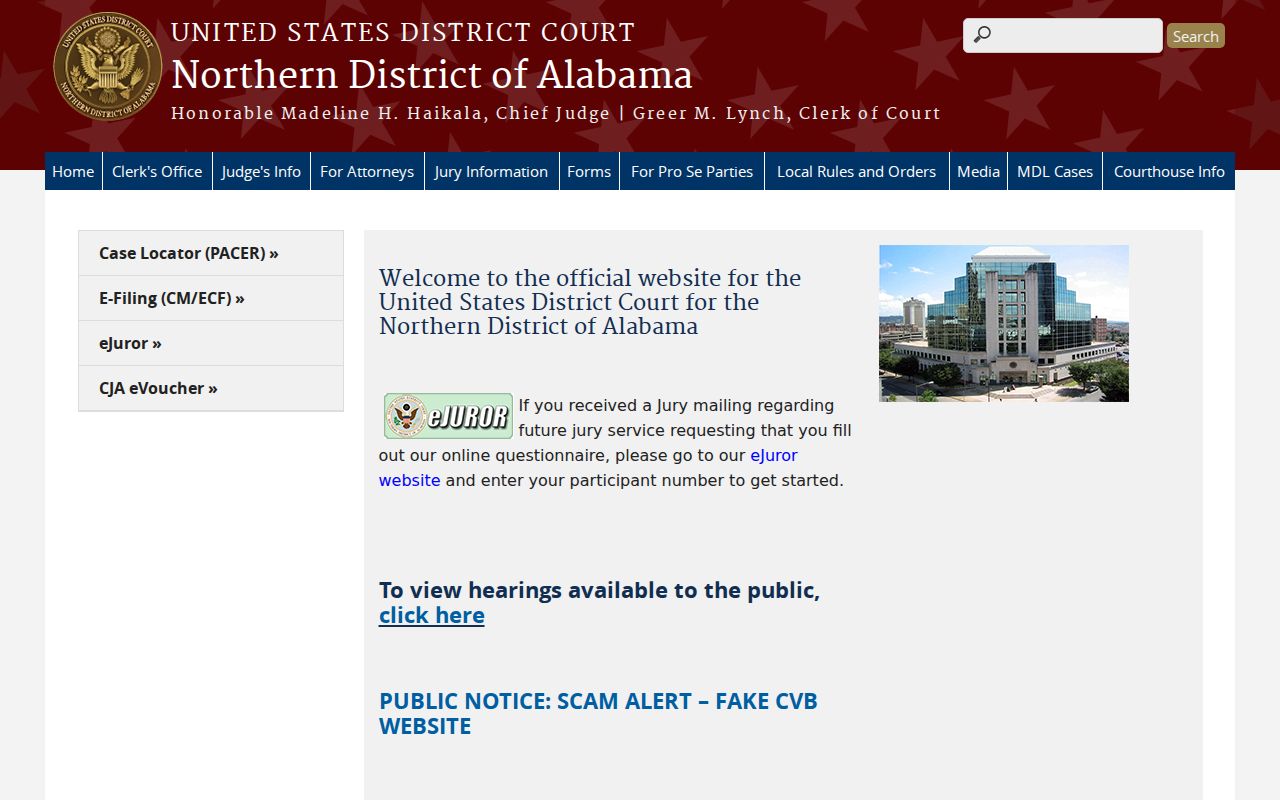
This federal venue does not hold Tuscaloosa County District Court traffic or misdemeanor files.
PACER's ALNDC lookup is the federal electronic-record channel.
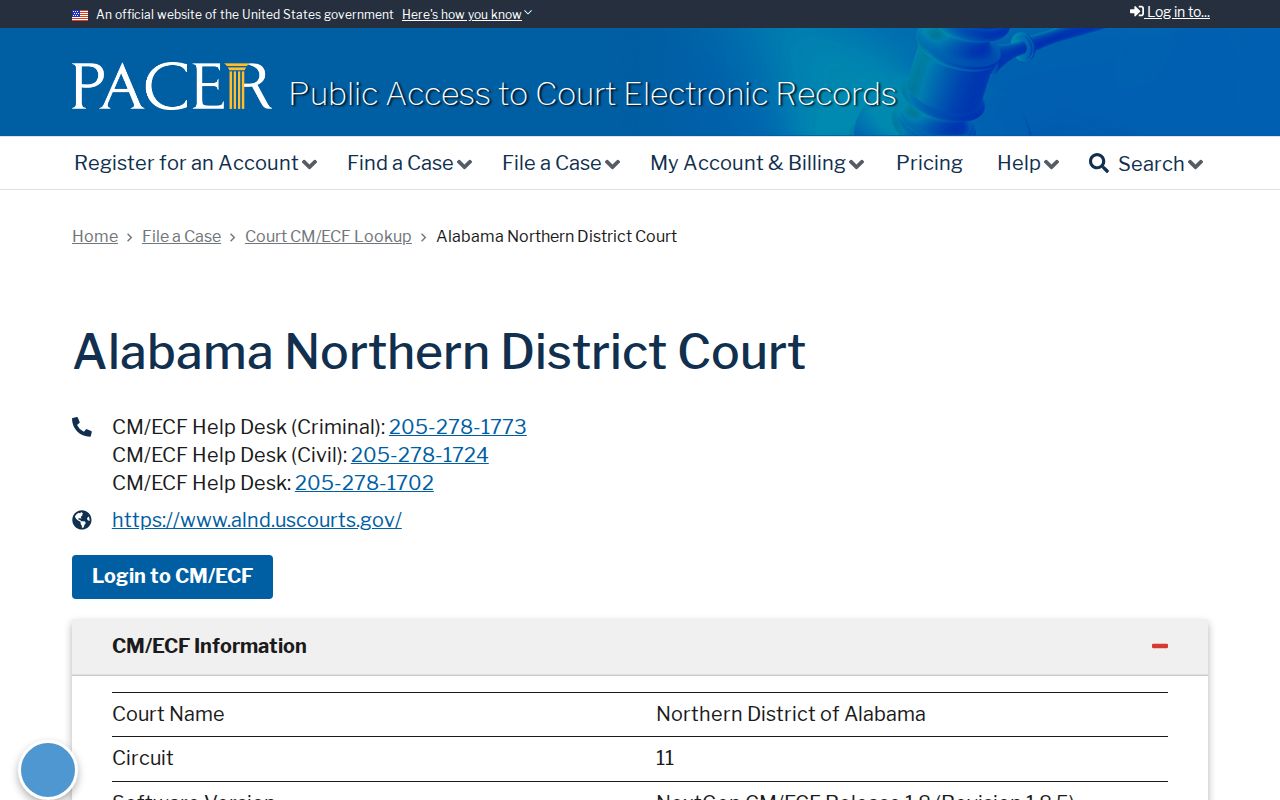
PACER should be used only when the case is federal, not simply because both courts use the words district court.
The U.S. Bankruptcy Court's Western Division page describes another separate federal court in Tuscaloosa.
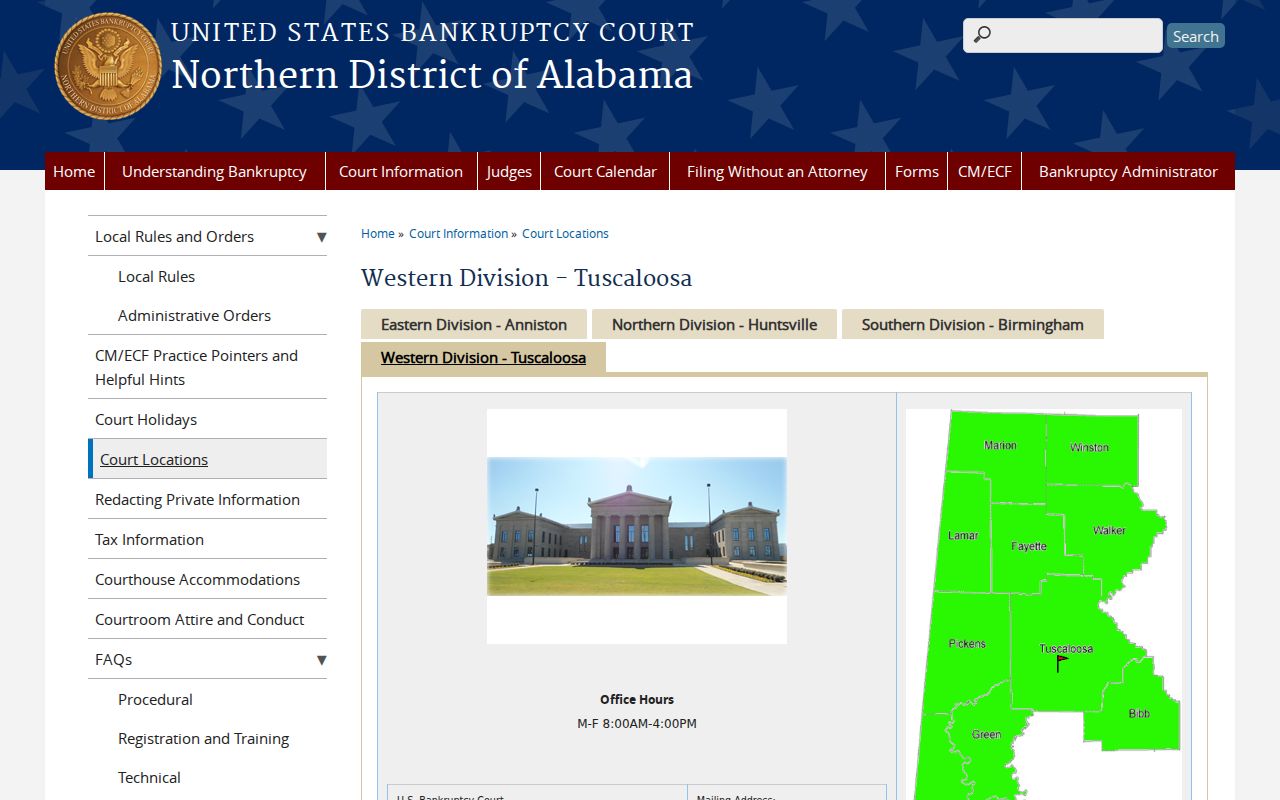
Bankruptcy records belong to the federal bankruptcy system and are not county District Court records.
Tuscaloosa District Record Limits
District Court files are generally open through clerk and electronic channels, but juvenile identifying information is confidential. Sealed and expunged records, Social Security numbers, driver-license numbers, grand-jury material, unexecuted warrants, medical information, and open investigative material may also be withheld or redacted. Alabama Code sections 36-12-40 and 36-12-41 support public access to writings, but they do not erase court-specific confidentiality rules.
When a District Court record cannot be found, first confirm the venue. A city citation may be municipal, a felony may have moved to Circuit Court, and a probate matter belongs to Probate Court. Then ask the Circuit Clerk whether the matter is too new, not indexed, older than the available electronic record, or restricted by law or order.
The courthouse directory places District judges on the sixth floor and the Circuit Clerk on the second floor. Visitors should allow time for parking and the metal detector. Official jury information says parking around the courthouse is free, weapons are prohibited, and smoking is not allowed inside. These visit rules help with a counter request, but they do not change which office owns the record.
Certified copies should be requested from the clerk when a record will be used for a legal or official purpose. The local fee page does not publish a complete current schedule, so call before mailing payment. Give the case number when known, the party name, the court division, the document requested, and a return address. The clerk may require a written request under Rule 30.
The free county docket and the paid trial-court record service answer different questions. The docket is organized around a setting date and optional last name and can show who is scheduled. Alacourt and Just One Look provide broader on-demand state trial-court information. Neither replaces a clerk-certified document. When the docket warns that a case may be absent, the second-floor clerk counter and phone are the official fallback.
District Court traffic records also differ from an ALEA driver record. The court file can show the citation, court date, offense, payment status, disposition, defensive-driving activity, and failure-to-appear consequences. An ALEA motor vehicle record is a separate state driver-history product. Correcting or explaining a court entry starts with the court; a driver-history issue starts with ALEA after the court outcome has been verified.
Criminal jurisdiction must be read as part of the case path. A lower-level matter may be disposed of in District Court. A felony can begin with an arrest and preliminary District Court proceeding, then move by indictment into Circuit Court. The Circuit Clerk maintains both record sets, but they may have different case identifiers and events. Searchers should follow the defendant, charge, and linked court activity rather than assume one file contains every stage.
Tuscaloosa County Probate Court is not another division of District Court. It has separate authority over estates, wills, guardianships, conservatorships, adoptions, mental health proceedings, marriage certificates, elections, and recorded instruments. Its records are handled by the Probate Judge and Probate Office. Municipal courts are also separate, with their own city case and payment systems.
District Court payment channels should not be confused with record channels. Alapay accepts eligible traffic tickets and disposed criminal balances using ticket or case identifiers and identity fields. Resolve addresses several traffic options. A receipt can document payment, but the docket and case file show the court event and disposition. Contact the clerk if a payment has posted but the court status remains unclear.
The two listed District judges have judge-specific phone numbers, yet routine case questions should go to the clerk. Court staff cannot provide legal advice. A party seeking defensive driving, contesting a citation, addressing a warrant, or appealing a judgment should follow the official court procedure and obtain counsel when legal interpretation is needed.